
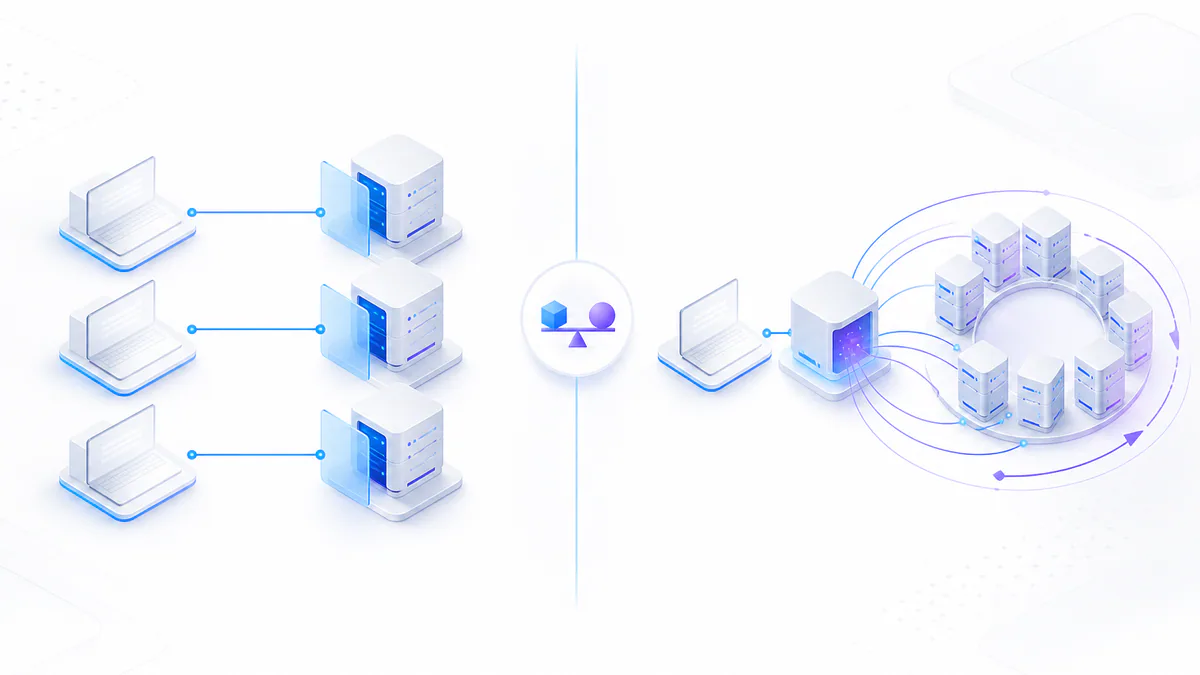
Standard proxies and backconnect proxies both route traffic through intermediary servers, but they behave very differently in scraping and automation workflows.
Standard proxies usually rely on one fixed IP or a small number of slowly changing IPs. Backconnect proxies use a rotating proxy pool that changes IPs automatically.
This guide compares both proxy types across IP rotation, speed, latency, bandwidth, uptime, cost, and practical web scraping performance.
- Standard proxies are simple and can work for small tasks, but they are easier to detect when one IP is overused.
- Backconnect proxies automatically rotate IP addresses and are better suited for high-volume web scraping.
- Dynamic IP rotation reduces detection risk and helps keep scraping sessions more stable.
- The best choice depends on project size, request volume, budget, speed requirements, and block risk.
Introduction: Overview of Proxy Types
Standard proxies act as intermediaries between the user and the target website. They usually use one fixed IP address or a small set of IPs that change slowly.
Backconnect proxies use a larger proxy pool and rotate IP addresses automatically. This creates stronger anonymity and better request distribution for workflows that need many requests.
Both proxy types can hide the user’s direct IP address, but backconnect proxies are usually better for web scraping, data extraction, ad verification, SEO monitoring, and large-scale automation.
This review explains how each proxy type works and how the differences affect speed, reliability, detection risk, and cost.
Related proxy option
Compare ProxyTitan backconnect proxies for rotating IP workflows.
Key features:
- Defines standard and backconnect proxies.
- Introduces their role in web scraping and data collection.
- Sets the foundation for a practical performance comparison.
Objectives of the Comparative Review
The goal of this review is to compare standard and backconnect proxies using practical performance metrics.
The main focus areas are IP rotation, speed, bandwidth, reliability, uptime, cost, and suitability for web scraping.
The comparison helps users decide whether a simple standard proxy setup is enough or whether a rotating backconnect proxy system is the better long-term option.
Main advantages of this comparison:
- Clarifies the review goals.
- Lists the performance metrics that matter most.
- Helps users choose based on project scale and scraping needs.
Standard Proxies in Web Scraping: Features and Limitations
Standard proxies route requests through a static IP address or a small proxy group. They can work for basic browsing, lightweight testing, and small scraping tasks.
However, standard proxies can become limited when request volume increases. Repeated access from the same IP makes detection easier, especially when websites monitor rate limits and request patterns.
If standard proxies are free or shared, they can also suffer from slow speeds, poor uptime, reused IPs, and higher block risk.
Free proxy note
Standard public proxies can help with small tests, but they often lack the speed and rotation needed for larger workflows. View free proxies .
Primary takeaways:
- Standard proxies use limited IP addresses.
- They can slow down larger scraping operations.
- They have a higher detection risk when one IP is reused too often.
- They are best for smaller or lower-risk workflows.
Backconnect Proxy Server: Dynamic IP Rotation Benefits
A backconnect proxy automatically rotates IP addresses while requests are active. Users usually connect to one proxy gateway, while the provider handles rotation across a larger proxy pool.
This rotation makes each request appear from a different IP or session, reducing the chance of IP-based blocks during scraping.
Backconnect proxies can support high concurrent request volumes, stronger anonymity, and more consistent scraping performance when compared with basic static proxy setups.
They are especially useful for long-running scraping, market research, competitor monitoring, SEO tasks, and ad verification.
Core features:
- Automatic IP address rotation.
- High-speed connections and scalable request handling.
- Lower chance of IP blocks during scraping.
- Useful for high-volume data collection workflows.
IP Rotation Techniques: Standard vs. Multiple IP Address Approaches
Standard proxies typically rely on static or slowly changing IP addresses. Backconnect proxies use frequent and dynamic IP rotation.
This difference affects how target websites detect traffic. A static IP can create repeated patterns, while a rotating proxy pool distributes requests across many addresses.
Backconnect proxies act as an IP rotator by reducing repeated access from one IP and helping bypass simple IP-based restrictions.
Essential elements:
- Compares static and dynamic IP rotation.
- Shows differences in detection risk and scraping suitability.
- Provides a clear reference for choosing a proxy type.
| Aspect | Standard Proxies | Backconnect Proxies |
|---|---|---|
| IP Change Frequency | Infrequent or static | Frequent and dynamic |
| Detection Risk | Higher due to repeated IPs | Lower due to varied IP usage |
| Ease of Use | Simple, less flexible | Advanced, more flexible |
| Suitability for Scraping | Best for small tasks | Ideal for large-scale scraping |
Speed and Latency Metrics in Proxy Performance
Speed and latency are important for web scraping because they affect how quickly data can be collected.
Standard proxies may lag when shared IPs, overloaded routes, or slow infrastructure are involved. Backconnect proxies often use larger IP pools and better routing to maintain more consistent request flow.
Lower latency improves scraping efficiency. Faster responses reduce timeout risk and help large scraping jobs finish sooner.
Primary takeaways:
- Speed affects scraping efficiency.
- Backconnect proxies generally provide better routing flexibility.
- Faster connections improve data extraction results.
- High latency can create timeouts and incomplete datasets.
Bandwidth and Throughput Comparison: Unlimited vs. Limited
Bandwidth is important when scraping large volumes of data. If a proxy setup has low bandwidth or limited throughput, scraping jobs become slower and less reliable.
Standard proxies often have lower bandwidth limits, especially when they are free, shared, or low-cost. This can create bottlenecks during simultaneous requests.
Backconnect proxies often provide higher throughput and may include unlimited bandwidth options, making them better for continuous data collection and larger scraping workflows.
Core features:
- Compares limited and unlimited bandwidth models.
- Explains how bandwidth affects scraping performance.
- Highlights the benefit of high throughput for large datasets.
Reliability and Uptime: Ensuring Consistent Data Access
Reliable scraping depends on consistent data access. If proxies frequently fail, data collection becomes fragmented and unstable.
Standard proxies can suffer from downtime, overload, or repeated blocks. Backconnect proxies reduce this risk by rotating through a larger IP pool and replacing weaker exits with better ones.
Higher uptime means fewer interruptions, fewer retries, and better long-term scraping stability.
Main advantages:
- Reliability keeps data access consistent.
- Backconnect proxies usually offer stronger uptime for larger workflows.
- Consistent performance reduces data loss and failed requests.
Cost Analysis: Evaluating ROI for Proxy Providers
Cost matters when choosing proxy infrastructure. Standard proxies usually cost less upfront, but they can become expensive indirectly if they cause failed requests, blocked jobs, and manual troubleshooting.
Backconnect proxies usually cost more because they need larger IP pools and more complex rotation infrastructure.
For high-volume scraping, the higher cost can be justified by better uptime, fewer blocks, faster throughput, and lower maintenance effort.
Key points:
- Standard proxies usually have lower upfront costs.
- Backconnect proxies cost more but provide better scalability.
- Fewer interruptions can create long-term savings.
- ROI depends on project size, request volume, and block risk.
Conclusion: Final Recommendations and Best Practices
Standard proxies and backconnect proxies both have useful roles, but they are not ideal for the same workloads.
Standard proxies can work for smaller tasks, simple browsing, and low-volume testing. Backconnect proxies are better for high-volume scraping, dynamic IP rotation, and continuous data collection.
If your workflow requires speed, bandwidth, reliability, and lower block risk, backconnect proxies are usually the stronger choice.
Primary takeaways:
- Backconnect proxies excel in dynamic performance.
- Standard proxies may be limited for large-scale tasks.
- Choose based on performance needs, scraping volume, and project scale.
- Monitor proxy performance regularly to keep workflows stable.
Standard vs Backconnect Proxies FAQ
Need backconnect proxies for larger workflows?
Use ProxyTitan when your scraping or automation setup needs rotating IPs, stable uptime, private authentication, and scalable proxy routing.