
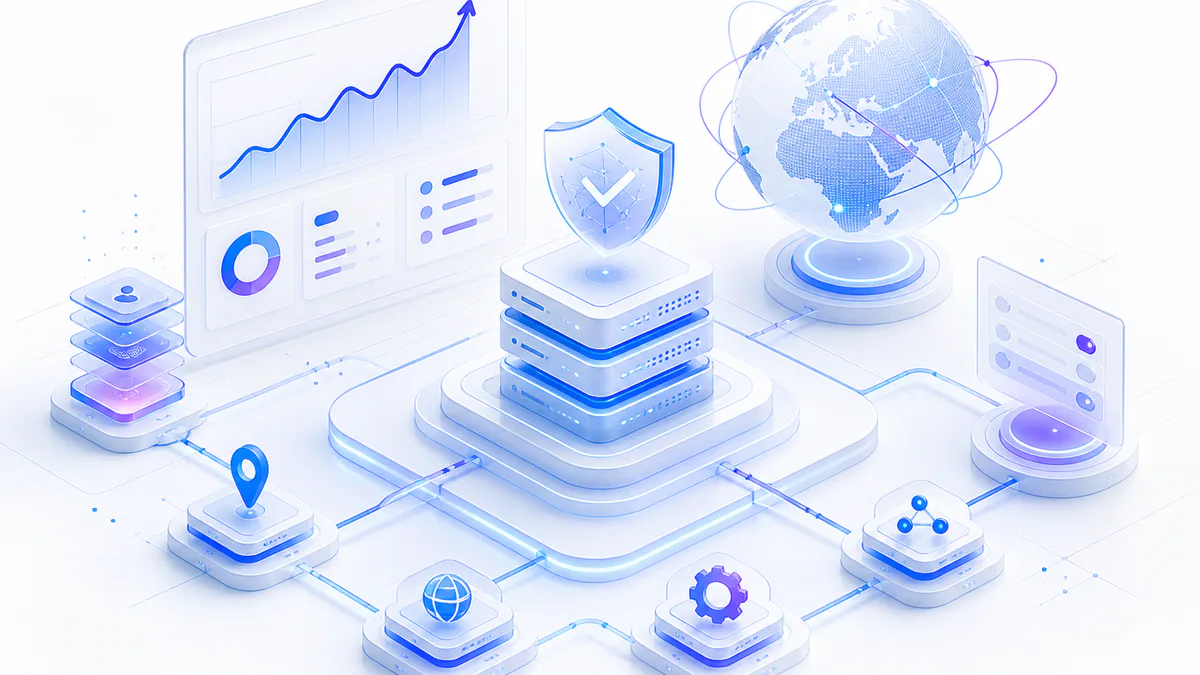
The proxy market keeps changing as users need faster, safer, and more reliable proxy access for scraping, automation, privacy, SEO, and market research.
Rotating proxies, backconnect proxies, and elite proxies are leading this shift with smarter IP switching, stronger infrastructure, improved anonymity, and better performance monitoring.
This guide explains the most important proxy trends, technical improvements, market changes, and practical use cases shaping modern proxy usage.
- Rotating proxies are becoming smarter with faster IP switching and better load balancing.
- Backconnect proxies are improving connection stability for high-volume workflows.
- Elite proxies continue to focus on speed, dedicated resources, stronger privacy, and secure access.
- AI, automation, real-time monitoring, and stronger encryption are becoming more important in proxy infrastructure.
Introduction to 2026 Proxy Trends
Changes in the proxy market are already visible. Rotating, backconnect, and elite proxies are leading many of the current technical improvements in proxy infrastructure.
These changes affect web scraping, digital marketing, SEO research, market intelligence, privacy protection, and automation workflows. Providers are improving IP switching, security, uptime, and performance reporting.
The result is better anonymity, faster connections, and stronger reliability for both business and individual users. Understanding these trends helps users select the proxy type that fits their specific workflow.
Key features:
- Overview of current proxy market trends.
- Impact on speed, anonymity, security, and reliability.
- Focus on rotating, backconnect, and elite proxy technologies.
Evolving Rotating Proxies: New Features and Advantages
Modern rotating proxies use more advanced logic to switch IP addresses faster and distribute traffic more effectively. This helps reduce repeated connections from the same IP and lowers the chance of detection.
Newer rotating proxy systems also include smarter load balancing and real-time performance monitoring. This helps users maintain stable workflows during larger scraping or automation jobs.
For high-volume data collection, improved IP rotation can reduce bans, improve response consistency, and make proxy usage easier to scale.
Related proxy option
For scalable request routing, compare unlimited rotating datacenter proxies .
Primary takeaways:
- Faster IP switching.
- Smarter load balancing.
- Better anonymity and stability.
- Improved performance during high-volume scraping.
Advancements in Backconnect Proxies
Backconnect proxies are becoming more dynamic and resilient. They provide better connection switching, improved traffic distribution, and more consistent routing for bulk requests.
A backconnect proxy setup usually connects users to one gateway endpoint while the proxy system handles IP rotation behind the scenes. This makes integration simpler while keeping the IP pool flexible.
Newer backconnect systems include smarter connection pool management, automatic IP cycling, and improved security protocols. These changes help users maintain reliable sessions during data-heavy workflows.
Related guide
Learn how backconnect and rotating proxy systems help distribute requests across proxy pools.
Essential elements:
- Improved dynamic switching.
- Better traffic distribution.
- More stable connection uptime.
- Stronger resilience for research, marketing, and scraping workflows.
Elite Proxies: Enhanced Security and Speed in 2026
Elite proxies continue to focus on stronger anonymity, faster speed, and more secure infrastructure. Many elite proxy setups use dedicated or cleaner IP pools to reduce sharing risks and improve trust.
Performance improvements come from better hardware, optimized routing, and stronger security configurations. This makes elite proxies useful for sensitive workflows, financial data collection, secure communication, and privacy-focused automation.
Compared with broad rotating or backconnect proxy systems, elite proxies often stand out when the user needs better privacy controls, dedicated resources, and more predictable performance.
Core features:
- Dedicated or cleaner IP pools.
- Advanced encryption options.
- Higher speed consistency.
- Strong security for sensitive tasks.
| Feature | Elite Proxies | Rotating Proxies | Backconnect Proxies |
|---|---|---|---|
| IP Allocation | Exclusive or dedicated | Dynamic and often shared | Dynamic and gateway-managed |
| Encryption | Advanced or strongly configurable | Standard to advanced | Standard to advanced |
| Speed | High and consistent | Variable by pool and route | Strong during managed traffic spikes |
| Best Use Cases | Sensitive tasks and secure data | Scraping and general automation | Marketing, research, and large-scale routing |
Market Trends and Industry Predictions for Proxy Services
The proxy market continues to grow as more industries depend on public data collection, ad verification, SEO tracking, competitive research, and automation.
Demand is shifting toward premium proxy services because users need better reliability, stronger privacy, and more predictable performance. Providers are responding with better dashboards, clearer usage policies, and more advanced proxy controls.
Privacy regulations and ethical proxy usage are also shaping the market. Users increasingly need providers with transparent policies, secure infrastructure, and clear compliance standards.
Main takeaways:
- Rising demand for premium proxy infrastructure.
- More focus on security, privacy, and transparency.
- Improved provider dashboards and performance reporting.
- Growth driven by scraping, SEO, digital marketing, and research workflows.
Technical Innovations in Proxy Infrastructure
Proxy infrastructure is improving through better hardware, smarter software, automation, AI-supported traffic handling, and real-time monitoring.
AI can help optimize IP rotation based on traffic patterns, success rates, failure rates, and proxy pool health. Automation reduces manual setup work and helps providers react faster to traffic spikes.
Encryption and anonymity features are also improving. Newer proxy systems focus on better data protection, cleaner routing, lower detection risk, and stronger reliability during peak usage.
Key features:
- AI-supported IP rotation and traffic optimization.
- Automated proxy pool management.
- Real-time monitoring, dashboards, and alerting.
- Stronger encryption and anonymity features.
- Reduced downtime through better failover systems.
Adoption Across Industries and Use Cases
Advanced proxy services are now used across many industries. Businesses use proxies for web scraping, market research, ad verification, SEO monitoring, competitor tracking, price monitoring, and data collection.
Proxy performance directly affects the quality of these workflows. Faster and more reliable proxies reduce failed requests, improve data accuracy, and help teams collect information at scale.
Digital marketing and SEO teams use proxies to verify ads, check rankings, research search results, and compare regional content. Research teams use them to collect public data more consistently.
Key points:
- Broad proxy adoption across scraping, marketing, SEO, and research.
- Better speed and uptime improve data quality.
- Proxy type should match the industry and workload.
- Advanced proxies help reduce bans and failed requests.
Conclusion: Future Outlook for Proxy Technologies in 2026
Proxy technologies are becoming faster, more secure, and more automated. Rotating proxies, backconnect proxies, and elite proxies are all improving in different ways.
Rotating proxies are becoming smarter and faster. Backconnect proxies are improving gateway-managed routing and dynamic connection handling. Elite proxies are becoming stronger for privacy, speed, and dedicated access.
Businesses and individual users should choose proxy services based on real needs: speed, anonymity, uptime, budget, location support, security, and scalability.
Primary takeaways:
- Proxy technology continues to improve in speed and security.
- Premium proxy adoption is growing.
- AI, automation, and monitoring will shape future proxy infrastructure.
- Choosing the right proxy type depends on the exact use case.
Proxy Trends FAQ
Need future-ready proxy infrastructure?
Use ProxyTitan when you need fast routing, strong uptime, private authentication, scalable connections, and proxy access built for modern scraping and automation workflows.