
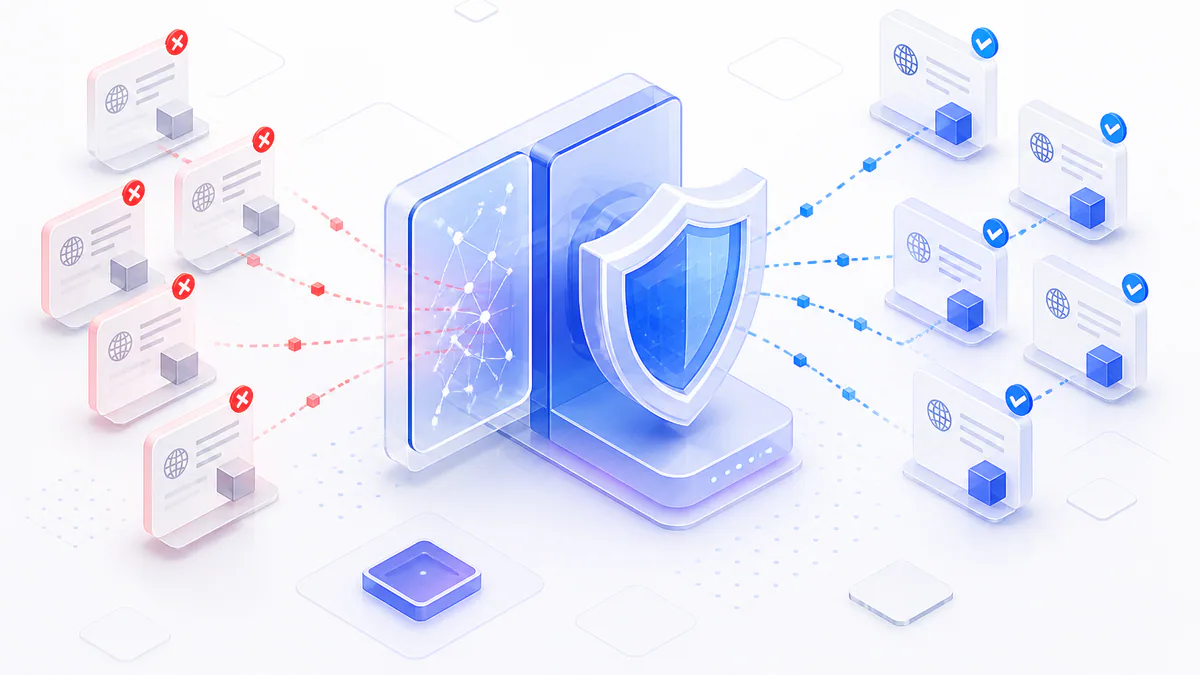
Free HTTP proxies can help you browse with a different IP address, access region-restricted content, and test simple proxy workflows without paying upfront.
They work by routing your web request through an intermediate proxy server. The target website sees the proxy IP instead of your direct IP address.
However, free HTTP proxies should be used carefully. Many public proxies are unstable, slow, overloaded, or unsafe for sensitive traffic.
- Free HTTP proxies can improve basic privacy and help access geo-restricted content.
- Public proxies can carry risks such as data interception, weak encryption, activity logging, and malware injection.
- Reliable free proxy lists should be updated frequently and include speed, uptime, protocol, and location details.
- Paid proxy options are usually better for business-critical workflows, automation, scraping, and private sessions.
Understanding Free HTTP Proxies
Free HTTP proxies serve as intermediaries that manage web traffic while helping users conceal their direct IP address. When you connect to a proxy server, the proxy receives your request, forwards it to the desired website, and sends the response back to your browser.
This process masks your real IP address and can make it harder for websites to track your direct network location. A transparent proxy can also route traffic, but it may reveal more information than an anonymous or elite proxy.
Free HTTP proxies are often used to bypass geographical restrictions, access blocked content, and run basic browsing tests. They can be useful for low-risk activity, but they should not be treated like private or fully secure infrastructure.
Related tool
Browse current public proxies with the ProxyTitan free proxy list .
Why Free HTTP Proxies Can Be Risky
Free HTTP proxies can be useful, but they also come with important risks. One of the biggest concerns is data interception. If a free proxy is unsecured, sensitive information can be exposed while traffic passes through the proxy server.
Many free proxies also lack strong encryption. This can leave transmitted data vulnerable, especially when users visit non-HTTPS websites or send private information through the connection.
Privacy violations are another concern. Some public proxy operators log user activity and may sell or share that data. Free proxies can also inject ads into pages, modify traffic, or expose users to malware risks.
Common risks:
- Data interception on unsecured proxy connections.
- Weak or missing encryption.
- Proxy operators logging user activity.
- Injected advertisements or modified page content.
- Malware exposure through unsafe public proxy infrastructure.
- Slow performance due to overloaded shared proxy servers.
How to Choose a Reliable Free HTTP Proxy
Choosing a reliable free HTTP proxy requires checking more than just the IP address and port. Speed and scalability matter because overloaded proxies can make browsing slow or unstable.
Location diversity is also important. A proxy list with multiple countries helps users test regional access, bypass location-based restrictions, and compare browsing behavior from different regions.
User reviews, public uptime indicators, and recent update timestamps can help you avoid dead or unreliable proxies. A frequently refreshed proxy list is usually more useful than an old static list.
Selection criteria:
- Consistent speed and low latency.
- Recent update timestamp.
- High uptime percentage.
- Country or region information.
- Clear protocol labels such as HTTP, HTTPS, SOCKS4, or SOCKS5.
- Positive user feedback or reliable testing data.
Frequently Updated Free HTTP Proxy List
A frequently updated free HTTP proxy list is important because public proxies often go offline quickly. A proxy that works today may be slow, blocked, or unavailable tomorrow.
Good proxy lists usually include protocol type, IP address, port, anonymity level, HTTPS support, latency, uptime, last checked timestamp, and country of origin.
These details help users choose proxies based on current performance instead of guessing. They also make it easier to filter out proxies that are too slow, too old, or not suitable for the intended task.
| Proxy list field | Why it matters |
|---|---|
| Protocol | Shows whether the proxy supports HTTP, HTTPS, SOCKS4, or SOCKS5. |
| Latency | Helps estimate how fast the proxy responds. |
| Uptime | Shows how reliably the proxy has stayed online. |
| Last checked | Confirms whether the proxy data is recent. |
| Country | Helps with geo-specific browsing and testing. |
| Anonymity | Shows whether the proxy may reveal identifying request details. |
How to Use a Free HTTP Proxy
Using a free HTTP proxy is usually simple once you have a working proxy IP address and port. Most browsers and operating systems allow manual proxy configuration.
Chrome users can open settings, navigate to system settings, enable manual proxy setup, enter the proxy IP address and port, and restart the browser.
Microsoft Edge users can follow a similar process through system proxy settings. Firefox users can open network settings, choose manual proxy configuration, enter the proxy details, and restart the browser.
Restarting the browser after configuration helps ensure the new proxy settings are applied correctly.
Basic setup steps:
- Choose a working HTTP proxy from an updated proxy list.
- Copy the proxy IP address and port.
- Open your browser or system proxy settings.
- Enable manual proxy configuration.
- Enter the IP address and port.
- Restart the browser and test your visible IP address.
Benefits of Using Free HTTP Proxies
Free HTTP proxies are attractive because they cost nothing. They can help users access geo-restricted content, test proxy behavior, and browse with a different visible IP address.
They also add a basic privacy layer by hiding your direct IP from the target website. This can be useful for users who want to avoid direct tracking during simple browsing tasks.
Some HTTP proxies can cache frequently accessed content, which may improve load times and reduce bandwidth usage in specific scenarios.
Main benefits:
- No upfront cost.
- Basic IP masking for low-risk browsing.
- Access to some blocked or geo-restricted websites.
- Useful for quick proxy tests.
- Can help compare regional page behavior.
Comparing Free HTTP Proxies to Paid Options
Free HTTP proxies and paid proxy services are built for different levels of reliability. Free proxies can work for quick tests, but they often come with performance and privacy concerns.
Paid proxies usually provide better privacy protection, faster speeds, lower detection risk, authentication, support, and more predictable uptime.
For critical workflows such as scraping, automation, account management, market research, or business use, paid proxy options are often the safer choice.
| Factor | Free HTTP Proxies | Paid Proxy Options |
|---|---|---|
| Cost | Free to use. | Requires payment or subscription. |
| Speed | Often slow or inconsistent. | Usually faster and more stable. |
| Privacy | May log or modify traffic. | More likely to include privacy controls and authentication. |
| Uptime | Unstable and often short-lived. | More predictable with infrastructure monitoring. |
| Support | Usually no support. | Provider support is commonly included. |
| Best use | Simple tests and low-risk browsing. | Business workflows, scraping, automation, and private access. |
Best Practices for Using Free HTTP Proxies Safely
Free HTTP proxies should be used with caution. Choose proxies with stronger security signals, avoid sending sensitive information, and prefer HTTPS websites whenever possible.
Do not use unknown public proxies for banking, payments, email accounts, admin dashboards, or private business tools. The proxy operator may be able to inspect, log, or modify traffic depending on the connection.
Monitoring proxy performance also matters. Slow speeds, repeated redirects, strange page behavior, or certificate warnings can indicate an unsafe or unreliable proxy.
Safety note
Avoid entering passwords, payment information, or private account data through unknown public proxies.
Safe usage checklist:
- Use HTTPS websites whenever possible.
- Avoid entering passwords or payment information through unknown proxies.
- Do not use public proxies for sensitive accounts.
- Check proxy speed and uptime before use.
- Stop using a proxy if pages behave strangely.
- Use user-agent and browser profile controls only for legitimate testing needs.
Alternatives to Free HTTP Proxies
Users who need more reliability should consider alternatives to free HTTP proxies. Private proxies provide dedicated access and are usually less crowded than public proxy servers.
Browser extensions can make proxy switching easier, while privacy-focused browsers such as Brave and DuckDuckGo focus on tracker blocking and safer browsing defaults.
VPNs are another option for users who need broader traffic encryption and simple privacy protection. Paid proxies are usually better when the main goal is scraping, automation, region testing, or backend workflows.
Common alternatives:
- Private proxies for dedicated or controlled proxy access.
- Paid rotating proxies for scalable workflows.
- VPNs for broader encrypted browsing.
- Browser proxy extensions for quick switching.
- Privacy-focused browsers for tracker blocking and safer browsing defaults.
Summary
Free HTTP proxies can be useful for basic browsing, simple proxy tests, and accessing some region-restricted content. They are easy to try and require no upfront payment.
At the same time, free proxies carry real risks. They can be slow, unstable, overloaded, unsafe, or operated by unknown parties. Avoid using them for sensitive data, private accounts, or business-critical workflows.
For stronger privacy, better speed, higher uptime, and predictable access, private or paid proxy services are usually the better long-term choice.
Free HTTP Proxy FAQ
Need faster and safer proxy access?
Free HTTP proxies are useful for simple tests. Upgrade to ProxyTitan when you need private authentication, better uptime, stable speed, and controlled proxy rotation.